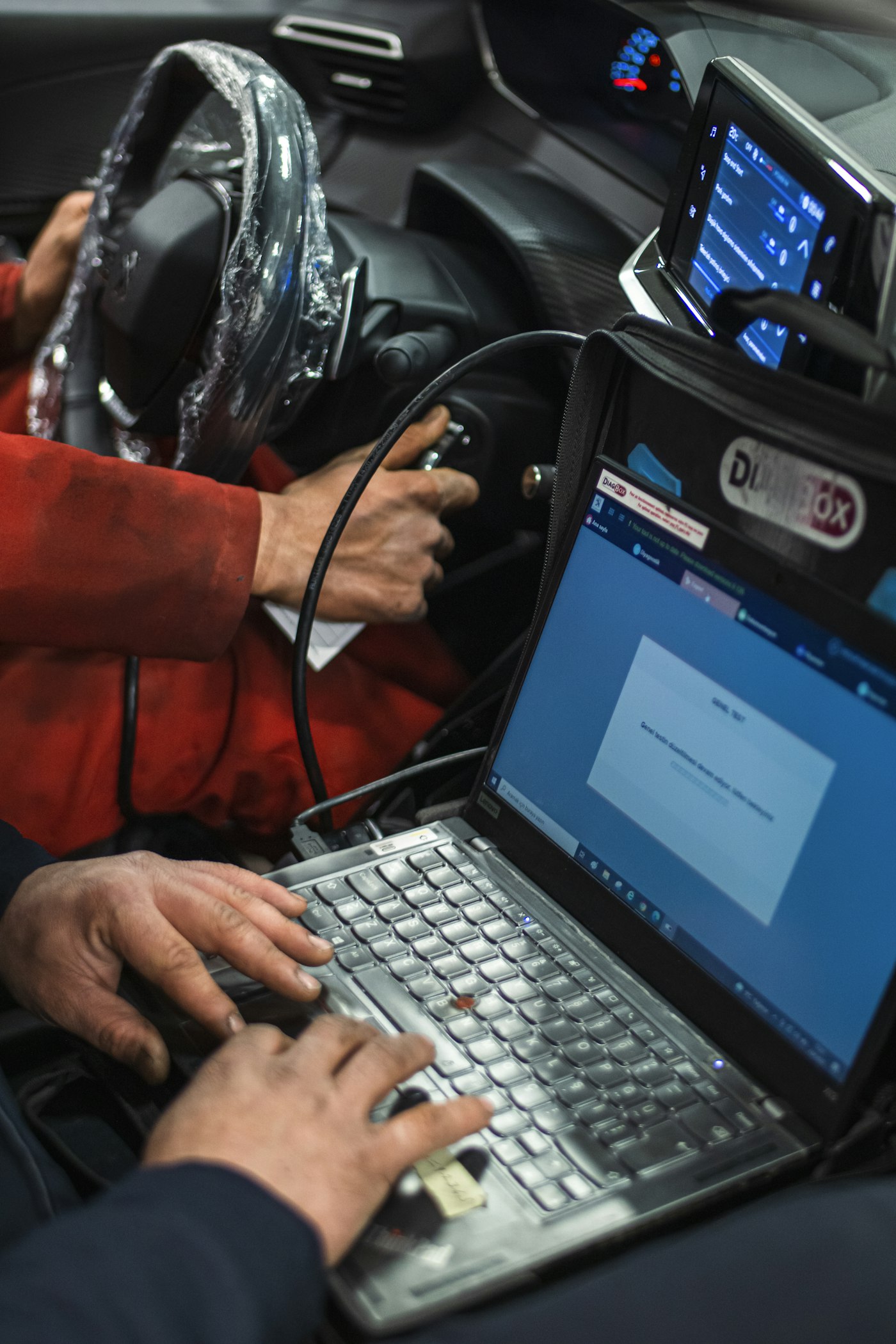
Computer diagnostics connects a scan tool to your car's diagnostic port to read fault codes and live sensor data from its control modules. The codes point to a system; the technician then tests components and wiring to confirm the actual cause. A good diagnostic ends with a confirmed fault and a clear repair recommendation, not just a list of codes.
 Stand-in photo
Step by step
- Interview: what the car is doing, when it started, what has been done already.
- Full-module scan: every control unit, not only the engine.
- Codes and freeze-frame: what was stored and what the car was seeing at the time.
- Live data: sensors watched in real time, at idle, under load and on a road test if needed.
- Guided and manual tests: voltage drops, pressures, smoke tests, actuator tests, component measurements.
- Confirmation: the cause is proven before a part is recommended.
- Explanation: what was found, what it means, and what it costs to fix.
Codes are clues, not answers
"P0420 catalyst efficiency" is often blamed on the catalytic converter, but a lazy oxygen sensor, an exhaust leak or a misfire can set it. "P0300 random misfire" can be coils, plugs, injectors, fuel pressure, vacuum leaks or compression. The tool gets you to the neighbourhood; the technician finds the house.
What you should get back
A plain-language explanation of the cause, evidence where possible (readings, photos), and a written estimate before work starts. If the fault is intermittent and could not be reproduced, you should be told that honestly, with a plan for catching it.
Questions
Can I bring my own code and skip the diagnostic?
You can bring the code; it helps. The testing that confirms the cause is still needed unless you are happy to pay for parts that might not fix it.