We replace brake pads, discs (rotors), calipers, hoses and fluid, diagnose ABS faults, and reset wear-sensor and service systems on European vehicles. Every brake job starts with a measurement, so you replace what is worn, not what is convenient.
Brake warning signs
- Squealing when braking (often a wear indicator)
- Grinding: metal on metal, stop and call us
- Steering wheel or pedal shakes when braking
- Pedal feels soft, spongy or sinks
- Car pulls to one side under braking
- Brake or ABS warning light on
- "Brake pad wear" message on European cars
- Burning smell after driving downhill
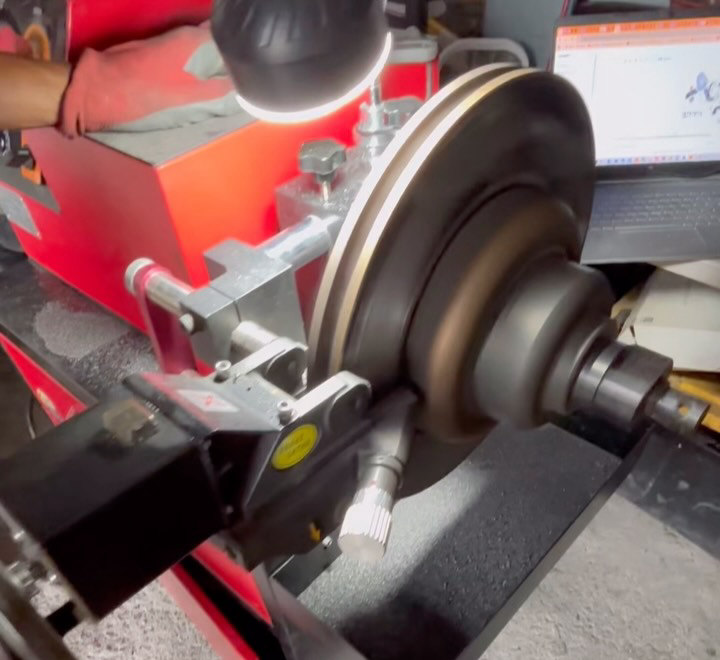
Disc machining on site
Discs that are still above minimum thickness but have light scoring or runout can be machined true on the workshop's own brake lathe rather than replaced, which saves money on European discs that are expensive to import. Discs below minimum are always replaced.
How we approach brake work
Pad thickness and disc thickness are measured, not eyeballed. Discs below the manufacturer's minimum, or with heavy scoring or runout, are replaced; discs in spec are kept. Calipers are checked for seized slides and pistons, a common cause of one-sided wear and pulling. Brake fluid is tested for moisture; fluid that has absorbed water boils under hard use and is the usual reason a pedal goes soft on a long descent.
On European vehicles, pads with electronic wear sensors need the sensor replaced and the service system reset. Electronic parking brakes on many BMW, Mercedes, Audi, VW, Volvo and Land Rover models must be put into service mode with a scan tool before the rear pads can be changed. We do this as part of the job.
Questions about brakes
Why does my car shake when I brake?
Usually uneven disc thickness (often called "warped" discs) or pad material deposited unevenly on the disc, sometimes a sticking caliper. Suspension wear can make it worse. We measure the discs and inspect the calipers before recommending anything.
Do I need to replace discs with pads every time?
No. Discs are replaced when they are below minimum thickness, badly scored, cracked or out of true. We measure them and tell you.