Brakes need attention when you hear squealing or grinding, feel a soft or long pedal, notice longer stopping distances, see a brake-pad wear warning on a European car, or when a measurement shows the pads or discs are at their minimum. Pads are typically replaced around 3 mm of friction material; discs when they reach the manufacturer's minimum thickness.
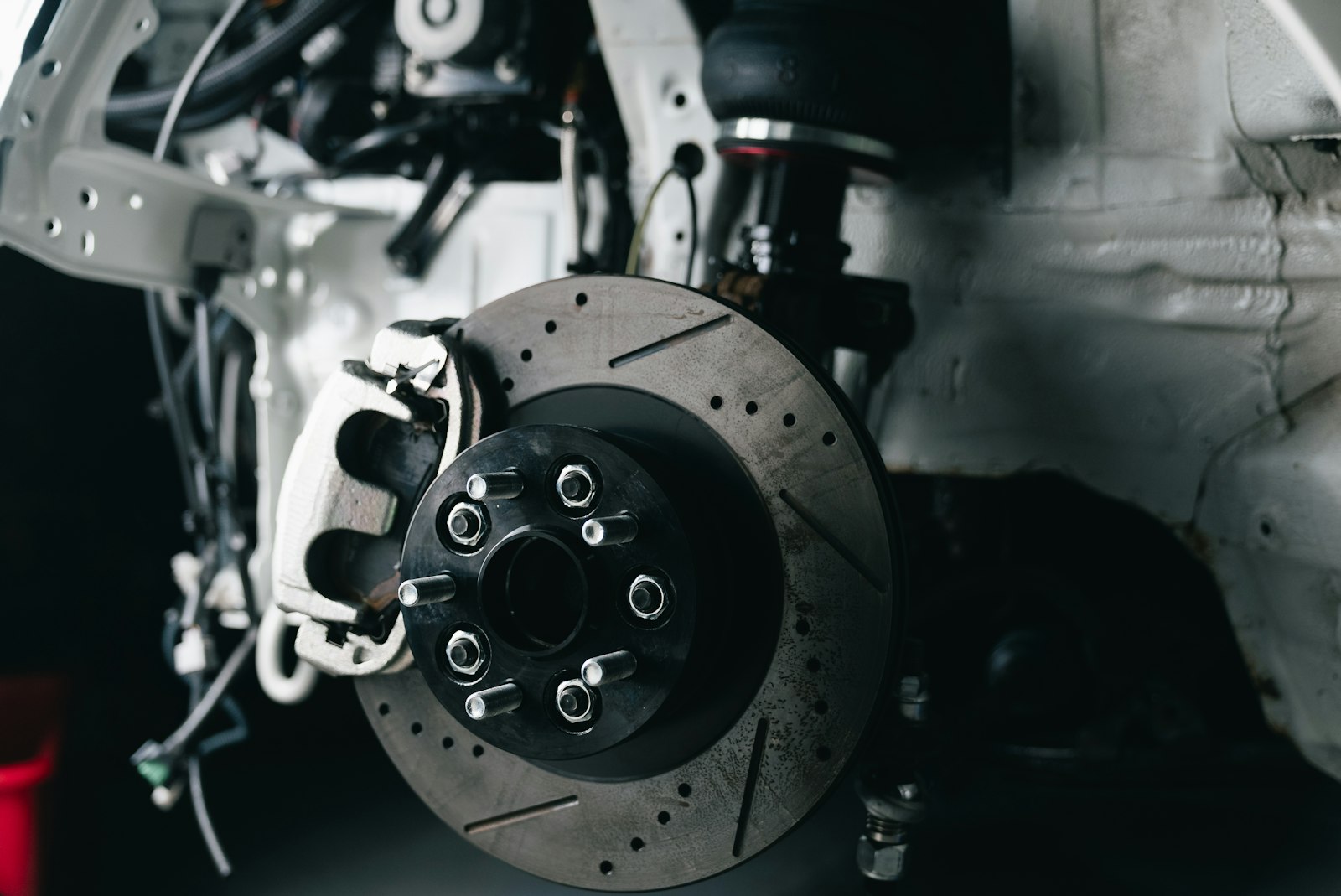 Stand-in photo
The signs
- High-pitched squeal: often the metal wear indicator on the pad.
- Grinding: pad material gone, metal on metal. Stop driving and call.
- Brake-pad wear message or light on BMW, Mercedes, Audi, VW, Volvo, JLR models.
- Longer stopping distances or a pedal that goes further than it used to.
- Soft, spongy pedal: air or old fluid, or a hydraulic fault.
- Pulling to one side: a sticking caliper or uneven wear.
- Burning smell after a long descent: overheated pads or a dragging brake.
What we measure
Pad thickness on every wheel, disc thickness against the minimum stamped on the disc, disc runout, caliper slide and piston movement, hose condition, and brake-fluid moisture content. Numbers, not opinions, decide what is replaced.
Do discs go with pads?
Not automatically. Discs are replaced when below minimum thickness, scored, cracked or out of true. Fitting new pads to worn discs shortens the pads' life and can cause noise and shudder; fitting discs that are still in spec is a waste of money. Measuring is the answer.
Questions
How long do brake pads last in Jamaica?
It varies enormously with the car and the driver. Hills, traffic and heavy vehicles wear pads fastest. Inspection at each service tells you how much is left.